


🔴 MCC BREAKING NEWS
- H Mohammed

- Dec 28, 2025
- 2 min read
JERA Advances Commercial Ammonia Shipping Plans from the U.S.
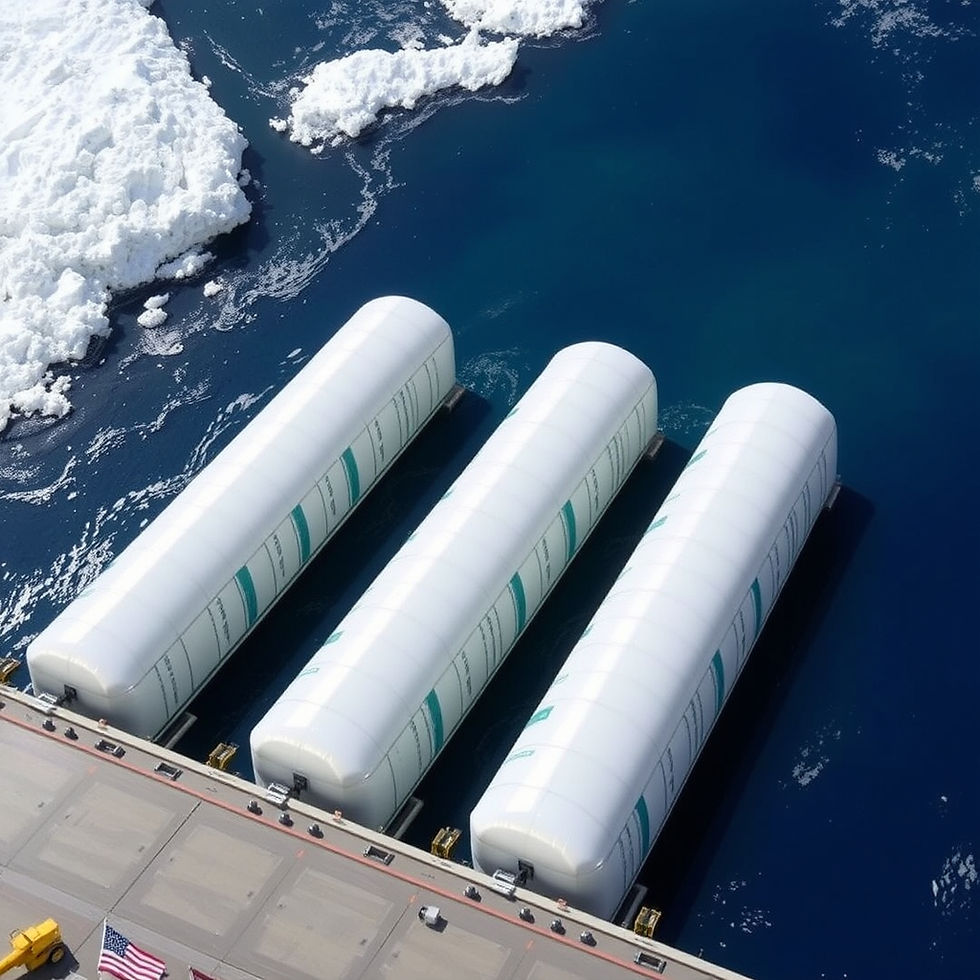
to Japan
Maritime Cargo Chronicles (MCC) reports that Japan’s largest power producer, JERA, has taken a major step toward establishing the country’s first commercial-scale ammonia fuel import chain, advancing plans to ship low-carbon ammonia from Louisiana, United States, to Japan.
The development follows the signing of long-term time charter agreements with NYK Line and Mitsui O.S.K. Lines (MOL), covering the construction and operation of purpose-built very large gas carriers (VLGCs) designed specifically for ammonia transportation. The move signals a clear transition from feasibility studies to executable maritime logistics.
According to Maritime Cargo Chronicles, the vessels will support JERA’s Blue Point ammonia production project in Louisiana, a USD 4 billion investment being developed with CF Industries and Mitsui & Co. The facility is scheduled to begin operations in 2029 with an annual production capacity of approximately 1.4 million tonnes of low-carbon ammonia.
JERA holds a 35 percent stake in the project and has secured long-term offtake arrangements, reinforcing the bankability of the supply chain from production to delivery.
📊 MARITIME CARGO CHRONICLES — MCC EXTRA | ENERGY TRANSITION
Ammonia Shipping Enters the Commercial Era
Maritime Cargo Chronicles notes that the charter agreements with NYK and MOL represent a decisive milestone for ammonia as a marine and power-generation fuel. Until now, ammonia shipping has largely been limited to fertilizer and chemical trades. This project marks the first time dedicated vessels are being aligned with power-sector demand at scale.
The vessels under development are expected to feature:
Ammonia-optimized cargo containment systems
Long-haul endurance for transpacific trade
Evaluation of ammonia-fueled propulsion, aligning with IMO decarbonization pathways
MOL and JERA have jointly studied large-scale ammonia transport for more than three years, focusing on ship design, receiving terminals, and operational safety. In parallel, NYK has already conducted ammonia shipping demonstrations, further strengthening Japan’s readiness for fuel transition.
Japan’s broader strategy aims to phase down coal imports, replacing baseload generation with ammonia-fueled power plants — a shift that will significantly reshape bulk and gas carrier demand patterns.
🌍 Strategic Market Perspective — MCC Insight
From a maritime economics standpoint, Maritime Cargo Chronicles highlights that ammonia is rapidly evolving from an industrial chemical into a strategic energy cargo, with implications across:
Specialized vessel ordering
Long-term charter structures
Port and bunkering infrastructure
Energy-linked commodity finance
Market participants involved in maritime logistics, energy cargo structuring, and trade facilitation — including firms such as MAKM INTERNATIONAL INC, which actively monitors emerging energy cargo flows — are closely following ammonia’s integration into global shipping networks.
📌 MCC Outlook
As vessel development, production investment, and regulatory alignment converge, ammonia is no longer a theoretical solution. It is becoming a tradable, transportable, and financeable energy commodity, positioning shipping at the center of the global energy transition.
— Maritime Cargo Chronicles (MCC)

Comments